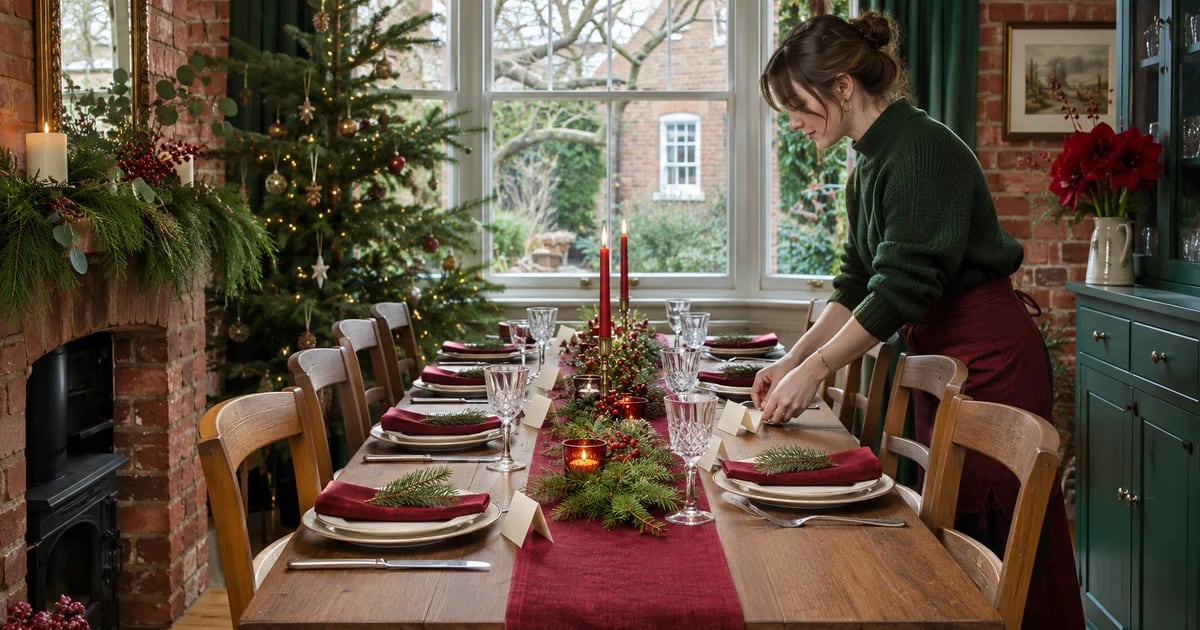
Count chairs before you write place cards
“Eight guests for Christmas dinner” often means ten people once you count the two people cooking. List everyone individually. If a child will use a high chair, count it as a place at the table. Ask their grown-up whether they are bringing one.
Set out the chairs you actually have. A bench that takes three adults on an ordinary evening may fit only two once the high chair is alongside it. Set a dinner plate in front of each seat and pull the chairs out as though people were already eating. That is the moment to discover that the cupboard holding the serving bowls opens into somebody’s back.
How would you seat ten people at one rectangular table?
Suppose dinner is for two hosts, two grandparents, two parents and their toddler, plus an aunt, a niece and the niece’s partner. Four people can sit on each long side and one at each end. The niece’s partner is coming for the first time. One grandparent has asked for the quieter side of the room.
Start at the kitchen end and read both long sides in the same direction. This arrangement gives the toddler a parent on either side and puts the new guest beside the person who invited them. It also gives the aunt and a grandparent a chance to catch up.
- Kitchen end, one place. Seat the host who will carry the dishes.
- Window side, four places from the kitchen. Seat the niece’s partner, the niece, the aunt and the grandparent who asked for a quiet seat.
- Opposite side, four places from the kitchen. Seat one parent, the toddler in the high chair, the other parent and the second grandparent.
- Far end, one place. The second host can pass dishes down this end and keep the conversation going while the first host is in the kitchen.
Ask privately about seats people might need
A guest may want to stay in their wheelchair, sit near the bathroom or hear better on one side. A simple note leaves the choice with them. Try “I’m setting the Christmas table this week. Is there a spot that would make dinner more comfortable for you? You can reply just to me.”
If someone asks for a clear route, check the route with chairs occupied and coats put away. Confirm the arrangement directly with them. A place card with their name is all the explanation the rest of the table needs.
Change the plan when a guest cancels or brings a partner
If the aunt cancels in this example, remove her setting and slide the niece closer to the grandparent at the window. The partner still has a familiar neighbour. A late addition is harder. Put a real chair and plate in the proposed spot before offering it. A small second table may work better than squeezing one chair into the only route out.
If you use a second table, move a few people together and give both tables serving dishes. Make the move ahead of dinner so nobody walks in to discover they are the sole person sitting apart.
Frequently asked questions
Does a family Christmas dinner need assigned seats?
You can reserve only the places that matter. Put cards at the high chair and the seat a guest requested, show a newcomer where their friend is sitting, and let everyone else choose among the open places.
Should children have a separate Christmas table?
Ask the children and their caregivers what will work. Older cousins may enjoy a table of their own. A toddler who wants help with dinner usually needs their caregiver within reach. Set any children’s table close enough for the agreed arrangement.
Where should serving dishes go on a crowded table?
Lay out the empty platters with the plates. If there is nowhere to put a water glass comfortably, move large dishes to a sideboard and keep smaller bowls or sauces on the table. Leave room for a guest to put their plate down while serving.