Write the oven needs beside each dish
Put the recipes on the counter and copy the details you will need with flour on your hands. Record the oven setting, size of pan, time in the oven and any standing time before serving. Count preheating and any change of temperature as separate jobs. A guest’s “little casserole” might arrive in the widest dish in the kitchen.
Try the empty pans on the racks in the cold oven. Include lids and handles. If the lid of one pot reaches the rack above, draw a line through that second rack on the plan for as long as the pot is inside. Now you know how much oven you actually have.
A worked one-oven timetable for dinner at 4 p.m.
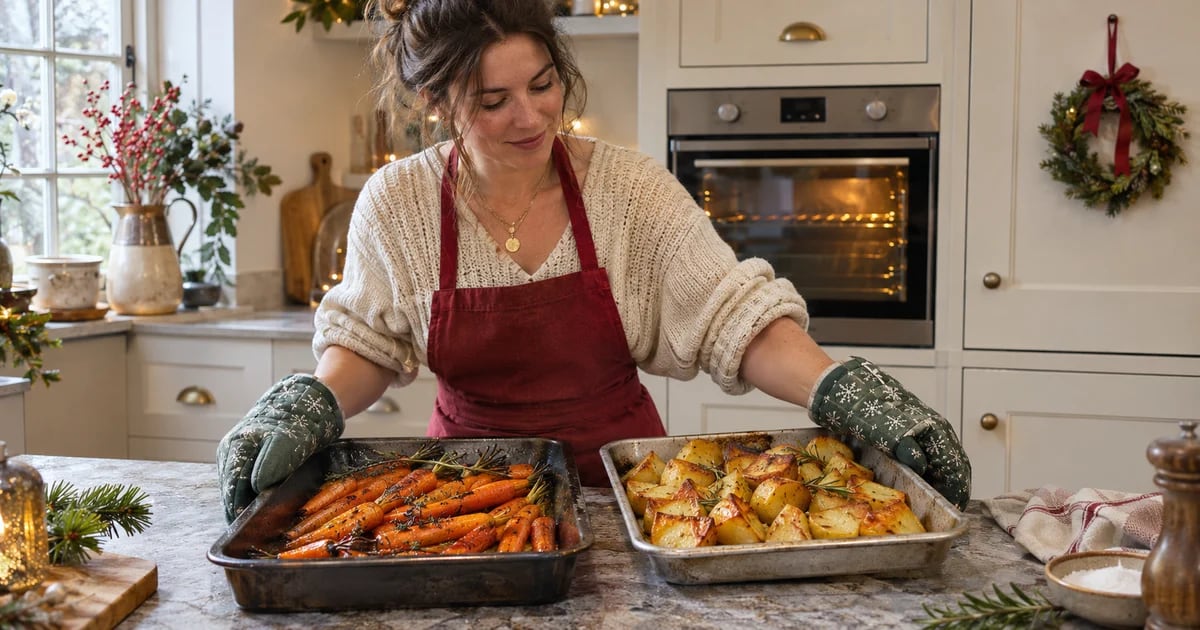
Consider a menu of mushroom pie, roast carrots, green beans and a cold dessert. In this example, the pie recipe calls for 45 minutes in the preheated oven and 10 minutes to stand. The carrot recipe calls for 30 minutes at the same setting. The pans fit on separate racks. Use your own recipes for cooking times, settings and checks.
Allow five minutes to cut the pie and carry everything to the table. Counting back from 4 p.m. puts the pie on the counter at 3:45 and in the oven at 3:00. Count back separately for the carrots so they can come out at 3:55.
| Time | Pie rack | Carrot rack | Counter and hob |
|---|---|---|---|
| Before 3:00 p.m. | Preheat oven to recipe setting | Leave this rack clear | Assemble pie, prepare carrots and allow time for your oven to preheat |
| 3:00 p.m. | Put pie in preheated oven and set timer | Free | Prepare green beans |
| 3:25 p.m. | Pie continues baking | Put carrots in and set separate timer | Set out platters |
| 3:45 p.m. | Check pie as recipe directs | Carrots continue roasting | Once pie is ready, let it stand for 10 minutes. Cook beans according to their recipe |
| 3:55 p.m. | Free | Check carrots and take out when ready | Slice pie and transfer vegetables to serving dishes |
| 4:00 p.m. | Free | Free | Carry dinner to the table |
What if two dishes need different temperatures?
A potato bake that needs 50 minutes at another setting cannot slip into a spare 30-minute slot. Decide which dish you most want to keep. For the menu above, you could keep the pie and swap roast carrots for a carrot salad, or serve mashed potatoes cooked on the hob. An extra burner can solve a problem that a second oven rack cannot.
A guest who offers dessert can free up a whole rack by bringing something ready to slice. Try this message before they shop. “The oven is booked until we sit down at four. Could you bring a cake we can serve as it is? I’ll clear a spot for the cake stand.”
Give the timetable to someone else for the last half hour
Circle the jobs another person can do without asking you. One guest can fill water glasses, another can take the green beans to the table, and the person who knows the pie recipe can decide when it is done. Put a serving spoon on each empty platter before the kitchen gets busy.
If dinner slips ten minutes, tell the guests and adjust the remaining jobs. A timer tells you when to check a dish. For a menu with meat or poultry, use a food thermometer and the applicable safe internal temperature. A serving deadline makes a poor test of doneness.
Frequently asked questions
How do I allow for a roast resting before Christmas dinner?
Write the recipe’s resting and carving times in the schedule before calculating its oven slot. Then see which sides can use that space. Include the time the oven takes to reach a different setting if the sides need one.
Can a late guest bring a tray that still needs to go in the oven?
Ask for the pan size, oven setting and time needed before promising a slot. If the meal has already filled the schedule, agree on a ready-to-serve contribution or save the new dish for another meal.